
Classic Apple Pie : The Ultimate Homemade American Dessert
Introduction
Few desserts capture the comfort of homemade baking quite like a classic Apple Pie. With its golden, flaky crust and warm cinnamon-spiced apple filling, this timeless dessert brings together simple ingredients to create something truly special. Whether served at Thanksgiving, a family gathering, or a cozy weekend dinner, homemade apple pie is always a welcome addition to the table.
The magic of apple pie lies in the contrast between its buttery pastry and tender apple filling. As the pie bakes, the apples soften and release their natural juices, blending with sugar, cinnamon, and a touch of lemon juice to create a rich, fragrant filling. Meanwhile, the crust turns beautifully golden and crisp, providing the perfect complement to the sweet fruit inside.
Although apple pie is especially popular during the fall season, it is delicious throughout the year. Serve it warm with a scoop of vanilla ice cream, add a spoonful of whipped cream, or enjoy a slice on its own with a cup of coffee.
Best of all, making apple pie at home is easier than many people expect. With the right apples, a well-prepared crust, and a few simple techniques, you can create a bakery-worthy dessert in your own kitchen.
What Is Classic Apple Pie?
Classic apple pie is a traditional American dessert made with a pastry crust filled with sliced apples, sugar, cinnamon, and other flavorings. The filling is enclosed in a top crust, which can be made as a solid pastry layer or arranged in a decorative lattice pattern.
During baking, the apples become tender while their juices combine with the sugar and spices to form a flavorful filling. The pastry develops a golden-brown exterior with a delicate, flaky texture.
Apple pie has become closely associated with American home cooking, particularly Thanksgiving celebrations and autumn gatherings. However, variations of apple-filled pastries have existed in different parts of the world for centuries.
The American version is especially loved for its generous apple filling, buttery crust, and warm spice flavor. Every family seems to have its own preferred method, whether that means adding extra cinnamon, using a mixture of apple varieties, or finishing the crust with a sprinkle of coarse sugar.
Why You’ll Love This Apple Pie Recipe
A Buttery, Flaky Crust
The crust is one of the most important parts of a great apple pie. When prepared properly, it becomes crisp and golden on the outside while remaining tender and flaky throughout.
Using cold butter and handling the dough gently helps create the ideal pastry texture.
A Sweet and Spiced Apple Filling
Fresh apples, cinnamon, sugar, and a little lemon juice create a balanced filling that tastes sweet, fruity, and slightly tangy. The spices enhance the natural apple flavor without overpowering it.
Perfect for Holidays and Family Gatherings
Apple pie is a wonderful choice for Thanksgiving, Christmas, autumn celebrations, potlucks, and Sunday dinners. Its familiar flavor makes it a crowd-pleasing dessert for guests of all ages.
Delicious Served Warm or Cold
A warm slice with vanilla ice cream is a classic combination, but apple pie is equally enjoyable at room temperature or chilled from the refrigerator.
Easy to Customize
You can add nutmeg, brown sugar, chopped pecans, or a little caramel sauce to create your own version. You can also choose between a traditional double crust, a lattice top, or a crumb topping.
Classic Apple Pie at a Glance
- Preparation time: 30 minutes
- Chilling time: 30–60 minutes
- Cooking time: 50–60 minutes
- Total time: Approximately 1 hour 50 minutes to 2 hours 30 minutes
- Servings: 8 slices
- Course: Dessert
- Cuisine: American
- Difficulty: Moderate
What Makes a Great Homemade Apple Pie?
A delicious apple pie depends on three essential elements: the apples, the pastry, and the filling consistency.
First, the apples should hold their shape during baking rather than turning into a completely soft purée. A mixture of sweet and tart apples often creates the best balance of flavor.
Second, the pastry needs to stay cold before baking. Cold butter creates small pockets in the dough that help produce a flaky crust. Overworking the dough can make it tough, so it is important to handle it gently.
Finally, the filling should be juicy but not watery. Too much liquid can make the bottom crust soggy, while insufficient thickening can cause the filling to spill out when the pie is sliced.
Allowing the pie to cool before cutting gives the filling time to set, making it easier to serve clean slices.
The Best Apples for Apple Pie
Choosing the right apples can make a noticeable difference in the finished dessert.
Granny Smith apples are a popular choice because their tart flavor balances the sweetness of the sugar and their firm texture holds up well during baking.
Honeycrisp apples offer a pleasant balance of sweetness and acidity, along with a crisp texture.
Braeburn apples have a rich, slightly tart flavor and generally maintain their shape during cooking.
Pink Lady apples provide a sweet-tart taste that works beautifully with cinnamon and brown sugar.
For a particularly flavorful pie, combine two varieties, such as Granny Smith and Honeycrisp. This creates a more complex apple flavor than using only one type.
Ingredients Overview
A classic homemade apple pie uses simple ingredients that work together to create its familiar flavor and texture.
- Fresh apples: The star of the recipe, providing sweetness, tartness, and a tender fruit filling.
- All-purpose flour: Helps create the pastry and thickens the apple filling.
- Cold unsalted butter: Adds rich flavor and creates a flaky crust.
- Granulated sugar: Sweetens the apples and helps their natural juices form a syrup.
- Brown sugar: Adds a deeper, caramel-like sweetness to the filling.
- Ground cinnamon: Provides the warm spice flavor associated with traditional apple pie.
- Nutmeg: Adds a subtle aromatic note when used in small amounts.
- Lemon juice: Brightens the apple flavor and helps balance the sweetness.
- Salt: Enhances the flavor of both the pastry and filling.
- Ice water: Brings the pastry dough together without warming the butter.
- Cornstarch: Helps thicken the apple juices so the filling holds together when sliced.
- Egg: Can be used as an egg wash to give the top crust a glossy golden finish.
A small amount of vanilla extract can also be added to the filling for extra warmth and sweetness.
Tips for the Best Results
Keep the butter cold. Cold butter is essential for a flaky pastry crust. If the dough becomes too warm while working with it, refrigerate it before rolling.
Slice the apples evenly. Aim for slices of similar thickness so they cook at roughly the same rate.
Avoid excessive filling moisture. Toss the apples with the sugar, spices, lemon juice, and thickener evenly to help prevent a watery filling.
Vent the top crust. If using a full pastry top, cut several slits to allow steam to escape during baking.
Protect the crust from overbrowning. If the edges become too dark before the filling is cooked, cover them loosely with strips of aluminum foil.
Let the pie cool before slicing. Cooling allows the filling to thicken and settle, helping each slice hold its shape.
Classic Apple Pie : Ingredients, Measurements, and Preparation Tips
Ingredients for Classic Apple Pie
This recipe makes one 9-inch apple pie, serving approximately 8 people. It features a buttery double crust and a sweet, cinnamon-spiced apple filling.
For the Homemade Pie Crust
- 2½ cups (315 g) all-purpose flour
- 1 cup (227 g) cold unsalted butter, cut into small cubes
- 1 tbsp granulated sugar
- 1 tsp salt
- 6–8 tbsp (90–120 ml) ice water
For the Apple Filling
- 6 medium apples (about 2½ lb or 1.1 kg), peeled, cored, and thinly sliced
- ½ cup (100 g) granulated sugar
- ¼ cup (50 g) packed brown sugar
- 3 tbsp (24 g) cornstarch
- 1½ tsp ground cinnamon
- ¼ tsp ground nutmeg
- 1 tbsp (15 ml) fresh lemon juice
- 1 tsp vanilla extract
- ¼ tsp salt
- 1 tbsp (14 g) unsalted butter, cut into small pieces
For the Egg Wash
- 1 large egg
- 1 tbsp (15 ml) milk or water
- 1 tsp coarse sugar, optional, for sprinkling
Ingredient Notes and Substitutions
Apples
A combination of Granny Smith and Honeycrisp apples works especially well. Granny Smith apples contribute tartness, while Honeycrisp apples add sweetness and a pleasant texture.
You can also use Braeburn or Pink Lady apples. Avoid varieties that become excessively soft when baked if you want distinct apple slices in the filling.
Butter
Use cold, unsalted butter for the crust. Cutting it into small cubes makes it easier to distribute throughout the flour while keeping it cold.
If you only have salted butter, reduce the salt in the crust slightly.
All-Purpose Flour
All-purpose flour provides enough structure for a sturdy pie crust without making it overly tough. Measure it carefully to avoid adding too much, which can make the pastry dry.
Granulated and Brown Sugar
Using both types of sugar creates a more complex flavor. Granulated sugar provides straightforward sweetness, while brown sugar contributes a deeper, caramel-like taste.
You can adjust the sweetness slightly depending on the apples you use.
Cornstarch
Cornstarch thickens the juices released by the apples during baking. It helps the filling hold together when the pie is sliced.
Mix it thoroughly with the sugar and spices to prevent lumps from forming.
Cinnamon and Nutmeg
Cinnamon provides the classic apple pie flavor, while a little nutmeg adds warmth. If you prefer a stronger spice profile, add a small pinch of ground ginger.
Lemon Juice
Fresh lemon juice brightens the apple flavor and balances the sweetness. Bottled lemon juice can be used if necessary.
Equipment You’ll Need
- A 9-inch pie dish
- A large mixing bowl
- A pastry cutter or fork
- A rolling pin
- A sharp knife and cutting board
- A vegetable peeler and apple corer, if available
- Measuring cups and spoons or a kitchen scale
- A small bowl for the egg wash
- A pastry brush
- A baking sheet to catch any bubbling filling
A kitchen scale is especially helpful for measuring the flour and butter accurately.
How to Prepare the Pie Dough
1. Combine the Dry Ingredients
In a large bowl, whisk together the flour, sugar, and salt until evenly combined.
2. Cut in the Cold Butter
Add the cold butter cubes. Use a pastry cutter or your fingertips to work the butter into the flour until the mixture resembles coarse crumbs with some pea-sized pieces of butter remaining.
Do not try to make the mixture completely uniform. Those small pieces of butter help create a flaky crust.
3. Add the Ice Water
Add 6 tablespoons of ice water gradually, mixing gently after each addition. Add more water, one tablespoon at a time, only if the dough remains too dry to hold together when pressed.
The dough should be moist enough to form a ball but should not feel wet or sticky.
4. Divide and Chill
Divide the dough into two portions, making one slightly larger if you want extra pastry for the bottom crust and edges.
Flatten each portion into a disk, wrap it, and refrigerate for at least 30–60 minutes.
Chilling allows the dough to firm up and relax, making it easier to roll without shrinking excessively during baking.
Preparation Tips for the Apple Filling
Slice the Apples Evenly
Cut the apples into slices approximately ¼ inch thick. Uniform slices cook more evenly and help the filling maintain a pleasant texture.
Mix the Dry Ingredients First
Combine the granulated sugar, brown sugar, cornstarch, cinnamon, nutmeg, and salt before tossing them with the apples. This helps distribute the thickener and spices evenly.
Avoid Adding Too Much Liquid
Toss the sliced apples with the sugar mixture, lemon juice, and vanilla. The apples will release juice as they sit, so avoid letting the filling stand for too long before assembling the pie.
Keep the Butter for the Filling Ready
The small pieces of butter will be scattered over the apple filling before adding the top crust. They add richness as the pie bakes.
Can You Prepare Apple Pie Ahead of Time?
Yes. The pie dough can be made up to 2 days ahead and refrigerated, or frozen for longer storage.
You can also peel and slice the apples shortly before assembling the pie, but for the best texture, prepare the filling close to baking time. If you need to cut the apples in advance, toss them with the lemon juice to slow browning and refrigerate them in a covered container.
For the best crust, assemble and bake the pie while the pastry is still cold.
Classic Apple Pie : Step-by-Step Instructions
Preheat the Oven
Preheat your oven to 400°F (200°C). Position a rack in the lower third of the oven to help the bottom crust bake properly and become golden rather than soggy.
Place a baking sheet on the rack to catch any filling that bubbles over during baking. This also helps provide a hot surface beneath the pie dish.
Roll Out the Bottom Crust
Remove the larger disk of chilled dough from the refrigerator. Lightly flour your work surface and rolling pin.
Roll the dough into a circle approximately 12 inches in diameter, turning it occasionally to prevent sticking.
Carefully transfer the dough to a 9-inch pie dish. Gently press it into the bottom and sides without stretching it, as stretched pastry can shrink during baking.
Leave about 1 inch of excess dough around the edge. Return the pie dish to the refrigerator while you prepare the filling if the pastry becomes soft.
Prepare the Apple Filling
In a large bowl, combine the granulated sugar, brown sugar, cornstarch, cinnamon, nutmeg, and salt.
Add the sliced apples, lemon juice, and vanilla extract. Toss everything together until the apple slices are evenly coated.
Make sure the cornstarch mixture is distributed throughout the apples rather than collecting at the bottom of the bowl.
The filling should smell fragrant and warmly spiced, with the sweetness of the apples balanced by the lemon juice.
Fill the Pie Crust
Remove the prepared pie shell from the refrigerator.
Arrange the apple slices inside the crust, distributing them evenly. If possible, layer the slices slightly to reduce large gaps as the apples soften during baking.
Scrape any remaining sugar and spice mixture from the bowl over the apples.
Scatter the small pieces of butter across the filling. These melt during baking and add richness to the apple mixture.
Avoid piling the apples too high in the center, as excessive filling can make it harder to seal the top crust.
Add the Top Crust
Remove the second disk of dough from the refrigerator and roll it into a circle approximately 11–12 inches in diameter.
Carefully lay the pastry over the apple filling. Trim the excess dough, leaving enough to seal the edges with the bottom crust.
Press the edges together firmly, then fold them under and crimp with your fingers or a fork to create a decorative border.
If you prefer a lattice top, cut the rolled dough into strips and arrange them in a woven pattern over the filling, sealing the ends around the edge.
Vent and Brush the Crust
If you are using a solid top crust, cut 4–6 small slits in the center to allow steam to escape.
In a small bowl, whisk together the egg and milk or water. Brush a thin layer over the top crust, avoiding large pools of egg wash around the edges.
Sprinkle with coarse sugar if desired. This creates an attractive finish and adds a delicate crunch.
For a particularly flaky crust, place the assembled pie in the refrigerator for 10–15 minutes while the oven finishes heating.
Bake the Apple Pie
Place the pie on the prepared baking sheet and bake at 400°F (200°C) for 20 minutes.
Reduce the oven temperature to 375°F (190°C) and continue baking for another 30–40 minutes, or until the crust is deeply golden and the filling is bubbling through the vents.
If the edges begin browning too quickly, cover them loosely with aluminum foil or use a pie crust shield.
The filling should bubble rather than simply look glossy. Bubbling indicates that the juices and thickener have reached a temperature that helps the filling set properly.
Total baking time is generally 50–60 minutes, although it may vary depending on your oven, apple variety, and the depth of the filling.
Cool the Pie Completely
Remove the pie from the oven and place it on a wire rack.
Allow it to cool for at least 3–4 hours before slicing. Although the aroma may make it tempting to cut into the pie immediately, cooling gives the filling time to thicken and settle.
If you slice it while it is still very hot, the apple juices may run out and leave the filling loose.
For slightly warm slices, allow the pie to cool until set, then gently warm individual portions before serving.
Slice and Serve
Use a sharp knife to cut the cooled pie into eight slices.
Serve each slice plain or with a scoop of vanilla ice cream, a spoonful of whipped cream, or a drizzle of caramel sauce.
The flaky crust, tender apples, and cinnamon-sugar filling create the comforting flavor that makes homemade apple pie a timeless favorite.
Troubleshooting Tips
- The bottom crust is soggy: Bake the pie on a lower oven rack, use a fully preheated oven, and make sure the filling bubbles before removing it.
- The filling is watery: Measure the cornstarch carefully, bake until the filling bubbles, and allow the pie to cool completely before slicing.
- The crust is too tough: Avoid overworking the dough and add ice water only as needed.
- The crust browns too quickly: Cover the edges loosely with foil during the final part of baking.
- The apples are still too firm: Continue baking until the filling bubbles and the apples are tender when tested through a vent with a small knife.
- The top crust cracks: The dough may be too dry. Add water gradually when preparing the pastry and avoid stretching it over the filling.
In Part 4, we’ll cover the best ways to serve apple pie, storage and reheating instructions, delicious variations, and answers to frequently asked questions.
part four
Classic Apple Pie – Part 4: Serving, Storage, Variations, and FAQs
How to Serve Classic Apple Pie
Classic apple pie is delicious on its own, but serving it with a complementary topping can make it even more special. The warm cinnamon-spiced apples and buttery crust pair beautifully with creamy, cold, or lightly sweet accompaniments.
- With vanilla ice cream: Serve a slice of slightly warm apple pie with a scoop of vanilla ice cream. The contrast between the warm filling and cold ice cream is a timeless favorite.
- With whipped cream: Add a generous spoonful of freshly whipped cream for a light, creamy finish.
- With caramel sauce: Drizzle caramel over each slice for a richer, sweeter dessert.
- With cheddar cheese: For a traditional American-inspired pairing, serve a thin slice of sharp cheddar alongside the pie.
- With coffee or tea: Enjoy a slice with hot coffee, black tea, or chai for a comforting afternoon treat.
For special occasions, sprinkle a little cinnamon over the topping or add a few thin apple slices to the serving plate for an elegant presentation.
How to Store Apple Pie
At Room Temperature
A freshly baked apple pie can generally be kept covered at room temperature for up to 2 days, provided it has cooled properly and does not contain perishable additions such as cream or custard.
Store it in a cool, dry place, away from direct sunlight.
In the Refrigerator
For longer storage, cover the pie or place it in an airtight container and refrigerate for up to 4 days. Refrigeration is also a good option if your kitchen is particularly warm or humid.
In the Freezer
Apple pie freezes well, either whole or in individual slices.
Allow the pie to cool completely, then wrap it tightly in plastic wrap and aluminum foil or place it in a freezer-safe container. Freeze for up to 3 months for the best quality.
Thaw the pie in the refrigerator before reheating, or reheat suitable portions directly from frozen with additional time.
How to Reheat Apple Pie
Oven method: Preheat the oven to 350°F (175°C). Place a slice or the whole pie in an oven-safe dish and heat until warmed through. Individual slices generally take around 10–15 minutes, while a whole refrigerated pie may require 20–30 minutes or longer.
Air fryer method: Warm individual slices at approximately 320°F (160°C) for 3–6 minutes, checking frequently to prevent the crust from overbrowning.
Microwave method: Heat an individual slice in short intervals until warm. This method is quick, but the crust may become softer rather than crisp.
For the best texture, use the oven when you have time. It helps restore the crust’s crispness while warming the apple filling.
Delicious Apple Pie Variations
1. Dutch Apple Pie
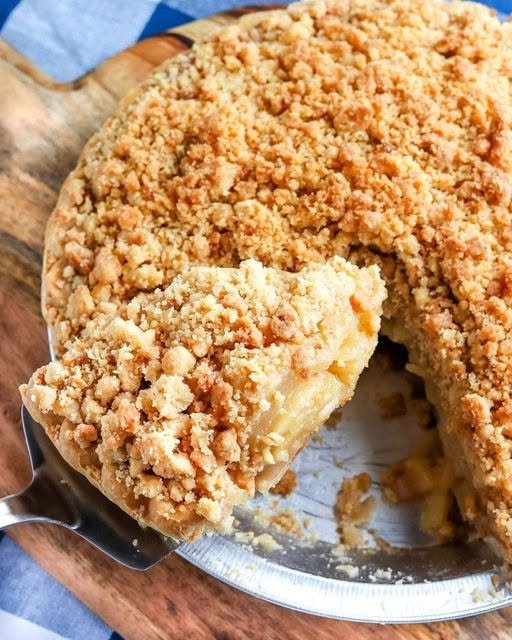
Replace the traditional pastry top with a crumb topping made from flour, brown sugar, butter, and a pinch of cinnamon. The buttery crumble adds a crunchy texture that contrasts beautifully with the soft apple filling.
2. Caramel Apple Pie
Add a light drizzle of caramel sauce over the apple filling before covering it with the top crust, or serve the finished pie with caramel on the side. Avoid adding too much liquid caramel inside the pie, as it can make the filling overly wet.
3. Apple Crumble Pie
Keep the bottom pastry crust but replace the top crust with a mixture of oats, flour, brown sugar, butter, and cinnamon. This version combines the structure of a traditional pie with the crunchy topping of an apple crumble.
4. Cinnamon Brown Sugar Apple Pie
Increase the brown sugar slightly and add a little extra cinnamon to create a deeper, warmer flavor. This variation is especially delicious with tart Granny Smith apples.
5. Apple Pecan Pie
Add a small handful of chopped pecans to the filling or sprinkle them into a crumb topping. Pecans provide a nutty crunch that complements the tender apples.
6. Apple Cranberry Pie
Add about ½ cup of fresh or frozen cranberries to the apple filling. Their tartness balances the sweetness of the apples and gives the pie a festive appearance, making it a lovely option for Thanksgiving and Christmas.
7. Mini Apple Pies
Divide the dough and filling among small pie tins or use a muffin pan to create individual pies. Reduce the baking time and check for a golden crust and bubbling filling. Mini pies are convenient for parties, lunchboxes, and dessert platters.
Frequently Asked Questions
Which apples are best for apple pie?
Granny Smith, Honeycrisp, Braeburn, and Pink Lady apples are excellent options. Combining a tart variety with a sweeter one creates a balanced flavor and helps the filling maintain a pleasant texture.
Should I cook the apples before putting them in the pie?
No, this recipe uses raw apples. They soften during baking and release their juices into the filling. Slice them evenly so they cook at a similar rate.
How do I prevent a soggy bottom crust?
Use cold pastry, avoid excessive liquid in the filling, and bake the pie on a lower oven rack. Baking until the filling bubbles also helps ensure the cornstarch thickens properly.
Why is my apple pie filling runny?
The filling may not have baked long enough, the thickener may have been measured incorrectly, or the pie may have been sliced before cooling. Allow the filling to bubble during baking and let the pie cool for at least 3–4 hours before cutting.
Can I make apple pie ahead of time?
Yes. Bake the pie a day ahead and allow it to cool completely before covering it. Store it at room temperature for up to 2 days if conditions are suitable, or refrigerate it for longer storage.
Can I use store-bought pie crust?
Absolutely. Store-bought pastry is a convenient alternative when you want to save time. Follow the package instructions for handling and baking, while keeping the apple filling measurements consistent.
Can I reduce the sugar?
Yes. You can reduce the sugar slightly, particularly if you use naturally sweet apples. Keep in mind that sugar contributes to the flavor and texture of the filling, so avoid making drastic changes without testing the result.
How can I tell when the pie is fully baked?
The top crust should be golden brown, and the filling should bubble through the vents. If the crust is browning before the apples are tender, cover the edges with foil and continue baking until the filling is bubbling.
Final Thoughts
Classic apple pie is more than just a dessert; it is a comforting homemade favorite that brings warmth to family meals, holiday celebrations, and everyday moments.
With its buttery, flaky crust and tender apples coated in cinnamon and brown sugar, this recipe delivers the traditional flavors that make apple pie so beloved. Choosing the right apples, keeping the pastry cold, and allowing the finished pie to cool properly will help you achieve a delicious result every time.
Serve it warm with vanilla ice cream, enjoy a slice with your afternoon coffee, or share it with family and friends during the fall season. However you serve it, this homemade apple pie is a timeless treat worth making again and again.