
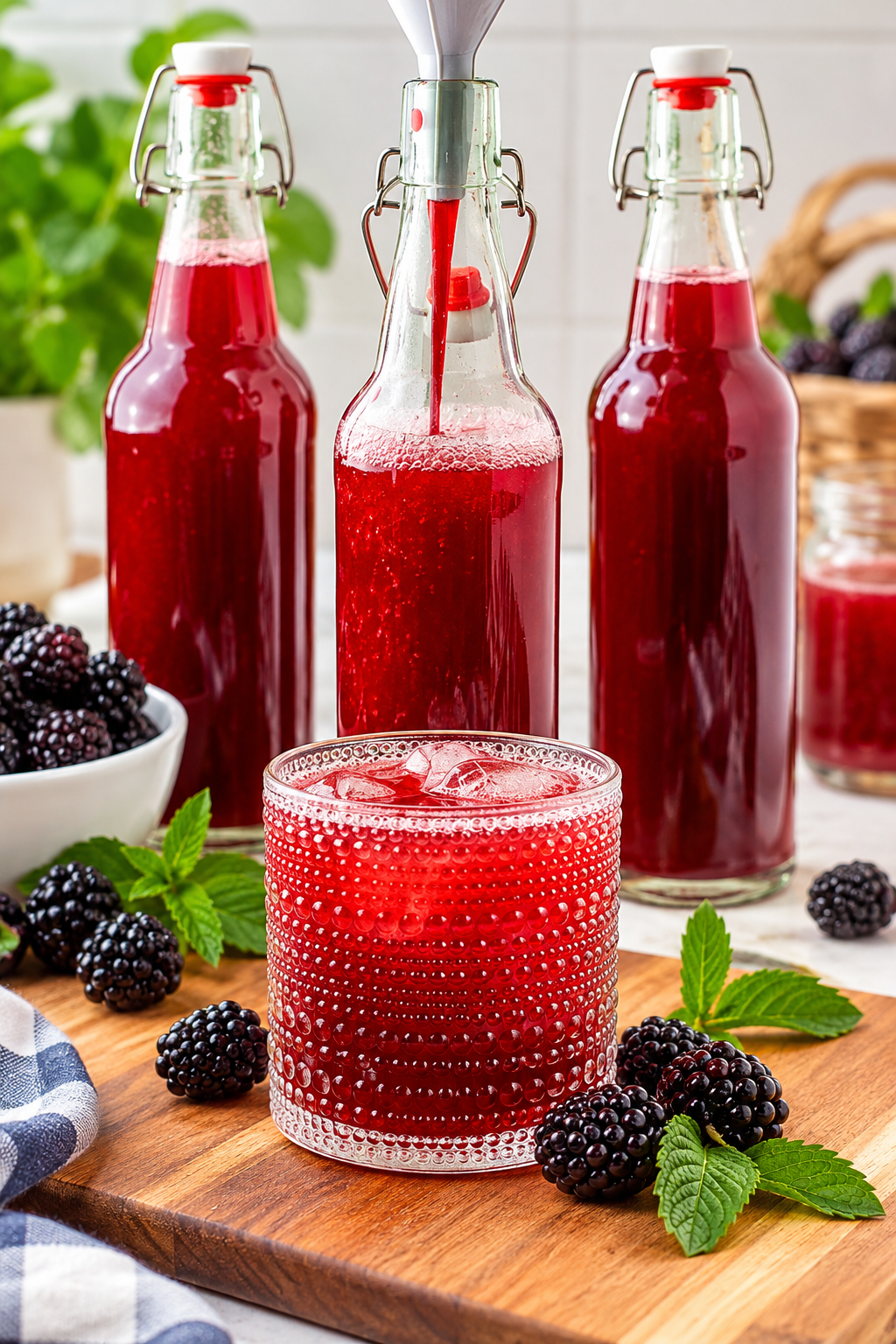
Blackberry Kombucha: A Refreshing Homemade Fermented Drink
Introduction
Blackberry kombucha is a refreshing, fruity drink that combines the natural tanginess of fermented tea with the sweet and slightly tart flavor of fresh blackberries. With its beautiful purple color, gentle fizz, and delicious berry taste, this homemade beverage is a wonderful alternative to sugary soft drinks.
Making blackberry kombucha at home is easier than you might think, especially if you already have a batch of plain kombucha ready for flavoring. Fresh or frozen blackberries can both be used, allowing you to enjoy this fruity drink throughout the year.
Whether you are new to homemade kombucha or looking for a new flavor to add to your regular rotation, this blackberry kombucha recipe is a simple and flavorful option to try.
What Is Blackberry Kombucha?
Blackberry kombucha is a fermented tea drink flavored with blackberries. Traditional kombucha is made by fermenting sweetened tea with a SCOBY, which stands for symbiotic culture of bacteria and yeast.
Once the tea has completed its first fermentation, blackberry puree or crushed blackberries can be added to introduce natural fruit flavor. The mixture is then bottled for a second fermentation, which can create a light, bubbly texture.
The result is a sweet-tart beverage with a fruity aroma, a refreshing finish, and a pleasant balance between the earthy taste of tea and the bold flavor of blackberries.
Because kombucha is fermented, its acidity, sweetness, carbonation, and alcohol content can vary depending on the ingredients and fermentation conditions.
Why You’ll Love This Blackberry Kombucha Recipe
There are plenty of reasons to make blackberry kombucha at home.
- Fresh berry flavor: Blackberries give the drink a naturally fruity taste with a balance of sweetness and tartness.
- Beautiful color: The deep purple shade makes this homemade beverage especially appealing when served in a clear glass.
- Naturally fizzy: A carefully controlled second fermentation can create refreshing bubbles without the need for a soda machine.
- Easy to customize: Adjust the amount of blackberries to create a milder or more intense berry flavor.
- Simple ingredients: The recipe uses plain kombucha and blackberries, with optional sweetener if desired.
- Perfect for warm days: Serve it chilled as a refreshing drink for afternoons, picnics, or casual gatherings.
Blackberry Kombucha Recipe at a Glance
- Recipe name: Blackberry Kombucha
- Preparation time: 10 minutes
- Fermentation time: Usually 1–3 days for the second fermentation, depending on temperature and activity
- Total time: Varies depending on fermentation
- Yield: Approximately 4 servings, depending on bottle size
- Main ingredients: Plain kombucha, blackberries, and optional sweetener
- Flavor profile: Fruity, tangy, lightly sweet, and refreshing
- Difficulty level: Easy, provided you have properly fermented plain kombucha
Note: This recipe assumes you already have plain kombucha from a completed first fermentation. Brewing kombucha from scratch requires additional time.
What Makes Blackberry Kombucha Special?
The best part of blackberry kombucha is how naturally the fruit complements the fermented tea. Blackberries bring a rich berry flavor, gentle sweetness, and a pleasant tartness that works beautifully with kombucha’s characteristic tang.
Fresh blackberries provide a bright, delicate flavor, while frozen blackberries are convenient and can release plenty of juice as they thaw. Crushing the berries slightly before adding them helps their flavor spread throughout the drink.
Another appealing feature is its versatility. You can keep the recipe simple with blackberries alone or experiment with complementary ingredients such as fresh ginger, lemon zest, or a small amount of mint.
The key is to let the fruit enhance the kombucha without overwhelming its distinctive flavor.
When to Serve Blackberry Kombucha
Blackberry kombucha is suitable for many occasions because it feels both refreshing and special.
- Afternoon refreshment: Enjoy a chilled glass when you want something fruity and tangy.
- Summer gatherings: Serve it in clear glasses with a few fresh blackberries for an attractive presentation.
- Brunch: Pair it with fruit salads, toast, pastries, or savory breakfast dishes.
- Picnics and outdoor meals: Keep it refrigerated in a sealed bottle until serving.
- Homemade drink menus: Offer it alongside other flavored kombucha varieties for a colorful selection.
For the best experience, serve blackberry kombucha cold. You can garnish each glass with a fresh blackberry or a thin lemon slice.
In the next part, we’ll cover the ingredients you need, possible substitutions, and helpful tips for making flavorful blackberry kombucha at home.
Blackberry Kombucha: Ingredients and Helpful Tips
Ingredients for Blackberry Kombucha
This homemade blackberry kombucha recipe uses a few simple ingredients to create a refreshing, fruity drink. The measurements below make approximately four servings, depending on the amount of kombucha used.
Main Ingredients
- 4 cups (960 ml) plain kombucha: Use properly fermented, unflavored kombucha from your first fermentation or plain store-bought kombucha that is suitable for a second fermentation.
- 1 cup fresh or frozen blackberries: Blackberries provide the drink’s fruity flavor, natural sweetness, and beautiful purple color.
- 1–2 tablespoons sugar or honey (optional): Add a small amount if you prefer a sweeter result. The fruit may provide enough sweetness on its own.
Optional Ingredients
- Fresh ginger: Adds a gentle spicy note that complements the berries.
- Lemon zest: Gives the drink a bright citrus aroma.
- Fresh mint: Adds a cooling, refreshing flavor.
- A few extra blackberries: Use them to garnish the glasses before serving.
You do not need all these optional ingredients. Blackberries and plain kombucha are enough to create a delicious, fruity drink.
Fresh vs. Frozen Blackberries
Both fresh and frozen blackberries work well in this recipe.
Fresh blackberries are ideal when they are ripe, fragrant, and in season. Rinse them gently under clean running water and remove any damaged berries before using them.
Frozen blackberries are a convenient alternative when fresh fruit is unavailable. Allow them to thaw slightly before crushing them so they release their juice more easily.
Frozen berries may produce a deeper color and a softer texture, but the flavor will still be delicious. Choose whichever option is most convenient.
How to Choose the Right Kombucha
The quality of your plain kombucha has a major influence on the final flavor.
Choose a kombucha with a clean, pleasantly tangy taste. Avoid using a batch that has visible fuzzy mold, unusual colored growth, or a rotten smell. A healthy SCOBY and properly prepared starter liquid are important when brewing kombucha at home.
If you are making kombucha from scratch, complete the first fermentation before adding blackberries. The first fermentation develops the characteristic kombucha flavor, while the second fermentation allows the fruit flavors to blend with the tea.
For a homemade batch, always use clean equipment and follow a reliable kombucha brewing method.
Tips for the Best Blackberry Kombucha
A few simple techniques can help you get better flavor and carbonation.
- Crush the berries gently: Lightly mash the blackberries to release their juice without turning them into a completely smooth puree.
- Adjust the sweetness carefully: Taste the plain kombucha first, then decide whether additional sweetener is necessary.
- Use clean equipment: Wash your hands and clean all utensils, bottles, and containers before handling the drink.
- Choose suitable bottles: Use pressure-rated bottles designed for carbonated beverages if you plan to ferment the kombucha a second time.
- Leave enough headspace: Follow your bottle manufacturer’s guidance and avoid filling bottles to the brim.
- Monitor carbonation: Fermentation speed varies with temperature, yeast activity, and available sugar. Check bottles regularly rather than relying on a fixed time.
- Refrigerate when ready: Once the drink reaches your preferred carbonation level, refrigerate it to slow fermentation.
Important safety tip: Carbonation creates pressure inside sealed bottles. Do not use ordinary glass bottles that are not designed to withstand pressure, and never leave bottles fermenting unattended for long periods. Open chilled bottles carefully, away from your face, because the drink may foam or spray.
Can You Make Blackberry Kombucha Without Added Sugar?
Yes. You can prepare blackberry kombucha without adding extra sugar if the fruit and plain kombucha already provide the flavor you want.
However, sugar serves as food for the microorganisms responsible for fermentation. Blackberries also contain natural sugars, so a second fermentation may continue even when you do not add a sweetener.
The final sweetness will depend on the kombucha, fruit, fermentation time, and temperature. Do not assume that a fermented drink is sugar-free simply because no extra sugar was added.
Common Ingredient Substitutions
You can adapt this recipe to suit your taste and the ingredients you have available.
- Blackberries: Substitute raspberries or blueberries for a different berry flavor.
- Fresh fruit: Use frozen blackberries if fresh ones are unavailable.
- Sugar: Leave it out for a tarter drink, or add a small amount to taste.
- Plain kombucha: Use an unflavored commercial kombucha suitable for additional flavoring if you do not brew your own.
For the most recognizable blackberry flavor, start with blackberries alone. Once you know how you like the drink, experiment with small amounts of ginger, lemon, or mint.
Preparing Your Ingredients Before Starting
Before assembling the recipe, make sure your blackberries are clean and your kombucha is ready to flavor.
- Rinse fresh blackberries gently and remove damaged fruit.
- Thaw frozen blackberries if necessary.
- Lightly crush the berries with a clean fork.
- Measure the plain kombucha into a clean container.
- Prepare clean, pressure-rated bottles if you plan to carry out a second fermentation.
With the ingredients prepared, you are ready to combine the blackberries and kombucha and begin the flavoring process.
How to Make Blackberry Kombucha Step by Step
Making blackberry kombucha at home is simple once you have properly fermented plain kombucha ready to use. The blackberries add a fruity flavor and rich color, while a carefully monitored second fermentation can create natural carbonation.
Follow these steps for a refreshing homemade drink.
Prepare the Blackberries
Start with 1 cup of fresh or frozen blackberries. If you are using fresh fruit, rinse it gently under clean running water and remove any damaged berries.
Place the blackberries in a clean bowl and mash them lightly with a fork. You want to release their juice without necessarily turning them into a smooth puree.
If you prefer a smoother drink, you can blend the berries briefly. Keep in mind that blending may make the finished kombucha cloudier and leave more fruit sediment in the bottle.
Measure the Plain Kombucha
Pour 4 cups (960 ml) of properly fermented, unflavored kombucha into a clean container.
Taste a small amount before adding the fruit. It should have a pleasant balance of tanginess and sweetness.
If your kombucha is already quite sweet, you may not need additional sugar. If it is very tart, you can add 1–2 tablespoons of sugar or honey, depending on your taste.
Use kombucha that has completed its first fermentation. Do not use a batch showing signs of mold or spoilage.
Combine the Blackberries and Kombucha
Add the mashed blackberries to the plain kombucha and stir gently with a clean utensil.
Make sure the fruit is distributed throughout the liquid so its flavor can develop evenly.
If you are using optional ingredients, add them at this stage. A little fresh ginger can introduce warmth, while a small amount of lemon zest can brighten the berry flavor.
Avoid adding too many extra ingredients at once. Keeping the recipe simple allows the natural blackberry flavor to stand out.
Transfer the Mixture to Bottles
Carefully pour the blackberry kombucha into clean, pressure-rated bottles designed for carbonated fermentation.
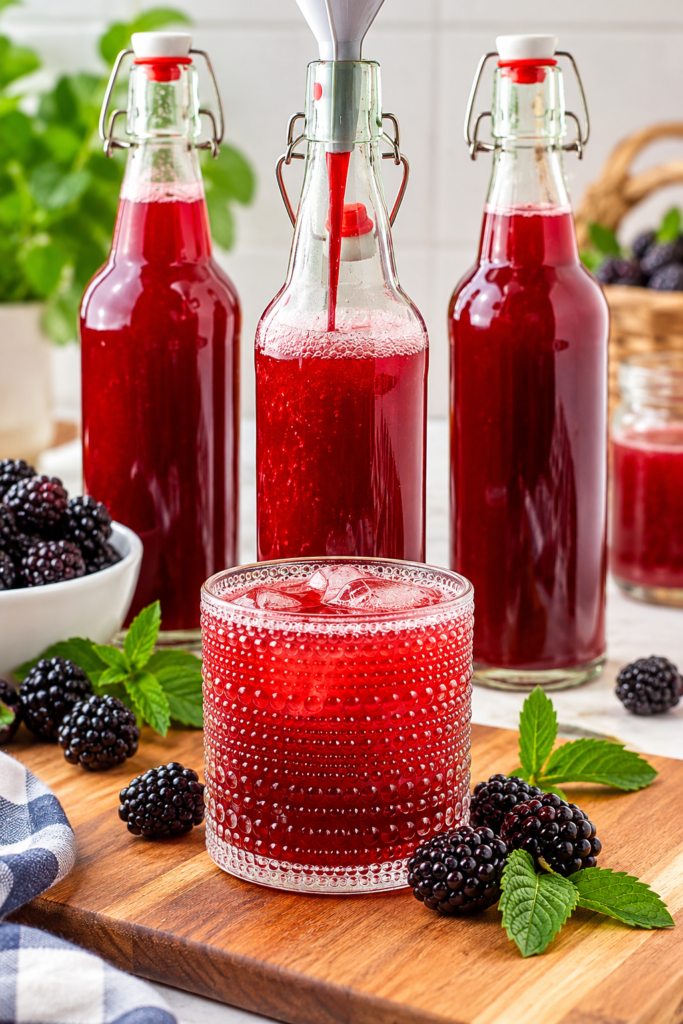
A funnel can help prevent spills. Leave the headspace recommended by the bottle manufacturer rather than filling each bottle completely.
Close the bottles securely according to their instructions.
Safety reminder: Never use ordinary glass bottles that are not designed to withstand pressure. Fermentation produces carbon dioxide, which can cause sealed containers to break if pressure builds excessively.
Allow the Second Fermentation
Place the bottles in a suitable location at a stable, moderate room temperature, away from direct sunlight.
Allow the blackberry kombucha to ferment for approximately 1–3 days, checking it regularly. The exact time depends on the temperature, the activity of the kombucha culture, the amount of sugar, and the fruit.
During this stage, the blackberries infuse the tea with their flavor, and carbonation may develop.
Do not rely on time alone to determine when fermentation is complete. Excessive pressure can build up in sealed bottles, so monitor them carefully and follow a reliable kombucha fermentation method.
Check the Flavor and Carbonation
Once the drink has developed a pleasant blackberry flavor and your desired level of carbonation, move the bottles to the refrigerator.
Chilling slows fermentation and helps reduce further pressure buildup, although it does not stop fermentation completely.
Open a chilled bottle carefully over a sink, pointing it away from your face and other people. If the drink foams excessively, stop and allow the foam to settle before continuing.
If the kombucha is not fizzy enough, further fermentation may be possible, but only if you can monitor the bottles safely. Do not leave them sealed for an extended period without checking their condition.
Strain the Blackberry Kombucha (Optional)
If you prefer a smoother drink, strain the kombucha through a clean, fine-mesh strainer before serving.
This removes most of the blackberry seeds and larger pieces of fruit.
You can skip this step if you enjoy a more rustic texture. Some fruit sediment is normal when whole or crushed berries are used.
For the best quality, keep the finished drink refrigerated and use clean utensils when pouring or handling it.
Serve and Enjoy
Pour the chilled blackberry kombucha into a clean glass.
For a simple, attractive presentation, garnish it with a fresh blackberry or a thin slice of lemon. You can also add a small sprig of mint if you enjoy its refreshing aroma.
Serve immediately while the drink is cold and fizzy.
Blackberry kombucha pairs well with light lunches, fresh salads, brunch dishes, and afternoon snacks. Its fruity, tangy flavor also makes it a refreshing alternative to conventional soft drinks.
Quick Troubleshooting Tips
- Not fizzy enough: Carbonation depends on fermentation activity, temperature, and available sugar. Check your process and monitor any further fermentation carefully.
- Too tart: Shorten the fermentation time in future batches or adjust the flavor with a little sweetener before serving.
- Too sweet: Allowing fermentation to continue may reduce some sweetness, but only use a controlled, safe method.
- Too much foam: Chill the bottle thoroughly and open it slowly over a sink.
- Too many seeds or fruit pieces: Strain the drink before serving.
Your homemade blackberry kombucha is now ready to enjoy. In the next part, we’ll cover storage, serving ideas, flavor variations, and frequently asked questions to help you get the most out of this fruity fermented drink.
Blackberry Kombucha: Storage, Variations, Serving Ideas, and FAQs
Tips for Making the Best Blackberry Kombucha
Once you have made your first batch of blackberry kombucha, a few simple habits can help you improve the flavor and consistency of future batches.
- Start with good-quality kombucha: A properly fermented, pleasantly tangy base creates the best foundation for the blackberry flavor.
- Use ripe blackberries: Ripe berries generally provide a fuller, sweeter flavor than underripe fruit.
- Avoid excessive sweetness: Taste your kombucha before adding sugar or honey. The fruit may provide enough sweetness for your preference.
- Keep everything clean: Wash your hands and clean all utensils, containers, and bottles before preparing the drink.
- Monitor fermentation carefully: Fermentation time varies, and sealed bottles can build up dangerous pressure. Use suitable bottles and check them regularly.
- Chill promptly: Refrigerate the finished kombucha when it reaches your preferred flavor and carbonation level.
For the most balanced result, allow the blackberry flavor to shine without adding too many competing ingredients.
How to Store Blackberry Kombucha
Proper storage helps preserve the flavor and carbonation of homemade blackberry kombucha.
After the second fermentation reaches your preferred level, refrigerate the bottles promptly. Keep them sealed according to the bottle manufacturer’s instructions and avoid exposing them to heat or direct sunlight.
For the best flavor, enjoy the drink while it is fresh. Because homemade kombucha can continue fermenting in the refrigerator, check bottles for excessive pressure before opening them.
Always open chilled bottles slowly and away from your face. If a bottle appears dangerously swollen, cracked, or under excessive pressure, do not handle it casually.
Discard the drink if you notice fuzzy mold, an unpleasant rotten smell, or other signs of contamination. A thin layer of yeast sediment can occur naturally, but fuzzy or unusually colored growth should not be treated as normal fermentation.
Can You Freeze Blackberry Kombucha?
Freezing blackberry kombucha is generally not the best way to preserve its carbonation and texture. Freezing can change the flavor and may cause a sealed bottle to crack or burst as the liquid expands.
For this reason, keep your finished kombucha refrigerated rather than freezing it in a sealed bottle.
If you have extra blackberries, freezing the fruit separately is a better option. You can use the frozen berries to prepare another batch whenever you want a fresh supply of blackberry kombucha.