
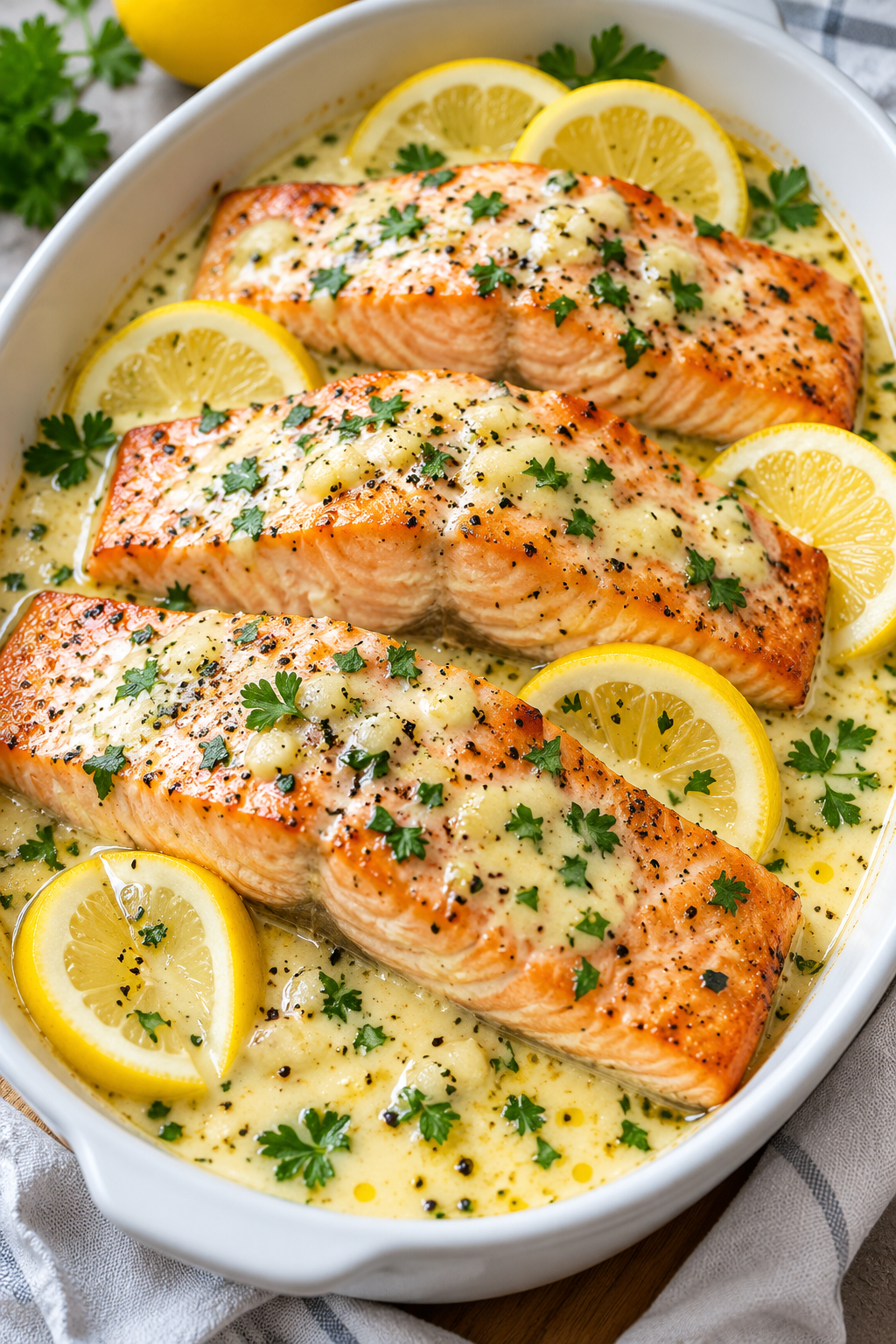
Salmon with Lemon Cream Sauce :
What Is Salmon with Lemon Cream Sauce?
Salmon with Lemon Cream Sauce is a seafood dish made with pan-seared salmon fillets served with a creamy sauce flavored with fresh lemon juice, garlic, butter, and seasonings.
The salmon is typically seasoned with salt, black pepper, and a few simple spices before being cooked in a hot skillet. This creates a golden exterior while helping preserve the fish’s naturally tender texture.
The sauce is prepared using ingredients such as butter, garlic, heavy cream, lemon juice, and sometimes chicken or vegetable broth. Fresh parsley, dill, or other herbs can add a final layer of flavor.
What makes this recipe special is the contrast between the salmon’s rich, savory taste and the refreshing brightness of the lemon. The cream softens the citrus acidity, creating a smooth sauce that complements the fish without overpowering it.
Although this dish feels restaurant-worthy, it is straightforward to prepare at home. You can make it in a single skillet, which also makes cleanup easier.
Why You’ll Love This Salmon with Lemon Cream Sauce
There are plenty of reasons to make this recipe part of your regular dinner rotation.
- Rich and refreshing flavor: Creamy sauce and fresh lemon create a delicious balance of richness and acidity.
- Tender, flaky salmon: Pan-searing helps develop a golden exterior while keeping the fish moist.
- Quick preparation: The dish can be ready in approximately 30 minutes.
- Simple ingredients: Most of the ingredients are easy to find at a regular grocery store.
- One-pan convenience: Cooking the salmon and preparing the sauce in the same skillet builds flavor and reduces cleanup.
- Easy to customize: Add spinach, capers, Parmesan, dill, or other herbs to suit your taste.
- Perfect for different occasions: Serve it for a weeknight dinner, a date night, or a special family meal.
This recipe is especially appealing when you want a satisfying meal that feels a little more special without spending hours in the kitchen.
What Makes This Salmon Recipe So Special?
The secret to this dish is the combination of properly cooked salmon and a balanced lemon cream sauce. Each component contributes something important to the final result.
Golden, Tender Salmon
Salmon has a naturally rich flavor and a tender texture that works beautifully with creamy sauces.
When cooked in a hot skillet, the surface develops a golden crust that adds flavor and texture. The inside should remain moist and flaky rather than dry.
Fresh or properly thawed frozen salmon can both work well. Fillets of similar thickness are especially helpful because they tend to cook more evenly.
Creamy Garlic Sauce
Garlic provides a savory foundation for the sauce, while butter adds richness and helps develop a smooth flavor.
Heavy cream creates the silky consistency that coats the salmon and complements its natural richness. A gentle simmer allows the sauce to thicken without becoming overly heavy.
The key is to cook the garlic briefly so it becomes fragrant without burning, then add the cream and other sauce ingredients.
Fresh Lemon Flavor
Lemon is the ingredient that makes this dish stand out.
Fresh lemon juice adds acidity, helping balance the cream and butter. A little lemon zest can provide an even brighter citrus aroma without requiring much additional juice.
Adding the lemon gradually allows you to control the flavor and avoid making the sauce too sour.
Fresh Herbs for the Finishing Touch
Parsley and dill are both excellent choices for this recipe.
Parsley adds a clean, fresh flavor, while dill pairs particularly well with salmon and lemon. A small amount of freshly chopped herbs gives the finished dish a beautiful appearance and a refreshing final note.
Ingredients Overview
This recipe uses simple ingredients that work together to create a flavorful seafood dinner.
Ingredients for the Salmon
- Salmon fillets: The main ingredient, providing a rich flavor and tender, flaky texture.
- Olive oil: Helps the salmon sear and develop a golden exterior.
- Salt and black pepper: Enhance the natural flavor of the fish.
- Paprika, optional: Adds subtle warmth and color.
- Garlic powder, optional: Provides an additional savory note.
Ingredients for the Lemon Cream Sauce
- Unsalted butter: Adds richness and helps create the sauce’s smooth flavor.
- Fresh garlic: Provides the aromatic base of the sauce.
- Heavy cream: Creates the creamy consistency that coats the salmon.
- Fresh lemon juice: Adds brightness and balances the richness.
- Lemon zest, optional: Intensifies the citrus aroma.
- Chicken or vegetable broth, optional: Helps adjust the sauce’s consistency and adds depth.
- Fresh parsley or dill: Provides freshness and complements the salmon.
- Salt and black pepper: Bring the flavors together.
Optional additions include baby spinach, capers, grated Parmesan, or a small pinch of red pepper flakes.
The exact ingredient quantities, substitutions, and preparation tips will be covered in Part 2.
Choosing the Best Salmon for This Recipe
The quality and thickness of the salmon can affect the final result.
Fresh salmon: Choose fillets with a fresh, mild smell and firm flesh. Fresh salmon is a great option when available.
Frozen salmon: Frozen fillets are convenient and can produce excellent results. Thaw them safely in the refrigerator before cooking and pat them dry thoroughly.
Skin-on salmon: The skin can become crisp when cooked properly. You can serve the fillets skin-side up or remove the skin before serving, depending on your preference.
Skinless salmon: This option is convenient when you want the sauce to coat every side of the fillet.
Try to choose fillets of similar thickness so they finish cooking at approximately the same time.
What to Serve With Salmon and Lemon Cream Sauce
The creamy sauce pairs beautifully with sides that absorb its flavor or provide a fresh contrast.
- Mashed potatoes: A classic side that complements the silky lemon sauce.
- Steamed rice: A simple, versatile option that allows the sauce to shine.
- Roasted asparagus: Adds freshness and a slightly crisp texture.
- Garlic green beans: Provide a savory vegetable side.
- Roasted baby potatoes: Offer a golden, satisfying contrast to the tender salmon.
- Pasta: Creates a more indulgent meal when tossed with a little extra sauce.
- Crusty bread: Perfect for soaking up the remaining lemon cream sauce.
- Green salad: Adds a light, refreshing contrast to the richness of the dish.
For a balanced dinner, serve the salmon with roasted vegetables and rice or potatoes. If you’re preparing a special meal, add a simple salad and crusty bread.
What to Expect From This Recipe
A successful Salmon with Lemon Cream Sauce should feature tender, flaky fish with a lightly golden exterior and a smooth, creamy sauce that has a noticeable but balanced lemon flavor.
The sauce should coat the salmon without being excessively thick or greasy. The lemon should brighten the dish, while the cream and butter provide a rich, satisfying finish.
For the best results, avoid overcooking the salmon and keep the sauce at a gentle simmer rather than allowing it to boil aggressively. This helps preserve the fish’s texture and keeps the sauce smooth.
Serve the salmon immediately after cooking, garnished with fresh herbs and an extra squeeze of lemon if desired.
Salmon with Lemon Cream Sauce Ingredients, Substitutions, and Expert Tips:
Ingredients for Salmon with Lemon Cream Sauce
This recipe makes 4 servings and combines pan-seared salmon with a smooth, creamy lemon sauce. The ingredients are simple, but together they create a flavorful dinner that feels restaurant-worthy.
For the Salmon
- 4 salmon fillets, about 6 ounces (170 g) each: Choose fillets of similar thickness so they cook evenly.
- 1 tablespoon olive oil: Helps the salmon develop a golden exterior.
- 1 teaspoon garlic powder: Adds savory flavor.
- ½ teaspoon paprika: Provides subtle warmth and color.
- ½ teaspoon salt: Enhances the natural flavor of the fish.
- ¼ teaspoon black pepper: Adds a mild, peppery finish.
For the Lemon Cream Sauce
- 2 tablespoons unsalted butter: Creates a rich, flavorful base.
- 3 cloves garlic, minced: Adds aromatic depth.
- ½ cup chicken or vegetable broth: Helps build flavor and balance the cream.
- 1 cup heavy cream: Creates a smooth, rich sauce.
- 2 tablespoons fresh lemon juice: Adds brightness and balances the richness.
- 1 teaspoon lemon zest, optional: Intensifies the fresh citrus aroma.
- 2 tablespoons freshly chopped parsley: Adds color and freshness.
- Salt and black pepper, to taste: Help balance the sauce.
Optional Additions
- 1 tablespoon capers for a salty, tangy flavor
- 1 cup baby spinach for extra color and vegetables
- 2 tablespoons grated Parmesan for a richer sauce
- A pinch of red pepper flakes for gentle heat
- Fresh dill instead of parsley for a classic salmon pairing
These additions are optional. The original combination of salmon, garlic, cream, and lemon is delicious on its own.
Ingredient Substitutions
You can adapt this recipe based on your preferences or the ingredients available in your kitchen.
Salmon
Fresh or frozen salmon both work well. If using frozen fillets, thaw them in the refrigerator before cooking and pat them dry with paper towels.
You can also use skin-on salmon. Sear the skin side first to help it become golden and crisp, then finish cooking the fillets as needed.
Heavy Cream
Heavy cream provides the richest, smoothest sauce. Half-and-half can be used for a lighter result, but the sauce will be thinner and may require more careful heating.
For a dairy-free version, use an unsweetened plant-based cooking cream designed for sauces. The flavor and thickness may differ from traditional cream.
Chicken or Vegetable Broth
Chicken broth adds savory depth, while vegetable broth keeps the dish suitable for a meal without meat-based broth.
You can use a small amount of water in a pinch, although the sauce may have less flavor. If your broth is salty, wait until the sauce has reduced before adding extra salt.
Fresh Lemon Juice
Fresh lemon juice provides the brightest flavor. Bottled lemon juice can work when necessary, but fresh juice and zest generally produce a more vibrant result.
Add the lemon gradually and taste the sauce before adding more.
Butter
Unsalted butter allows you to control the seasoning. Salted butter is also suitable, but you may need less additional salt.
Fresh Herbs
Parsley is a versatile option, while dill gives the sauce a more traditional seafood flavor. Chives can also work well.
If using dried herbs, add a smaller amount initially because dried herbs tend to have a more concentrated flavor.
Expert Tips for Perfect Salmon
A few simple techniques make a noticeable difference in the final dish.
1. Pat the salmon dry. Removing excess moisture helps the fish develop a golden exterior instead of steaming in the skillet.
2. Use fillets of similar thickness. This helps all four portions cook at approximately the same rate.
3. Season just before cooking. Apply the salt, pepper, garlic powder, and paprika shortly before the salmon goes into the pan.
4. Preheat the skillet. A properly heated pan helps create a golden surface. Use medium to medium-high heat and avoid letting the oil smoke.
5. Avoid moving the salmon too early. Let the fish sear before turning it so it can release more easily from the pan.
6. Don’t overcook the fish. Salmon becomes dry when cooked too long. For food safety, the standard recommended internal temperature is 145°F (63°C) at the thickest part.
7. Let the sauce simmer gently. A vigorous boil can cause the cream sauce to reduce too quickly or become less smooth.
8. Add lemon gradually. Lemon juice balances the richness, but too much can make the sauce overly acidic.
9. Return the salmon to the sauce briefly. A short finish in the skillet helps the flavors come together without unnecessarily prolonging the cooking time.
How to Make the Lemon Cream Sauce Smooth
The secret to a smooth sauce is controlling the heat and adding the ingredients in the right order.
Start by melting the butter in the skillet after removing the cooked salmon. Add the minced garlic and cook briefly until fragrant, taking care not to brown or burn it.
Pour in the broth and scrape up the flavorful browned bits from the bottom of the pan. Let the broth simmer briefly to reduce slightly.
Lower the heat, then stir in the heavy cream. Allow the sauce to simmer gently until it begins to thicken.
Add the lemon juice and optional zest gradually, stirring as you go. Finish with parsley, taste the sauce, and adjust the seasoning.
If the sauce is too thick, add a little broth. If it is too thin, allow it to simmer gently for another minute or two. Avoid aggressively boiling the sauce after adding the cream and lemon.
Can You Prepare Salmon With Lemon Cream Sauce Ahead of Time?
You can prepare some components in advance, although the dish is best served freshly cooked.
- Prepare the ingredients: Mince the garlic, chop the parsley, and zest and juice the lemon shortly before cooking.
- Measure the sauce ingredients: Have the broth and cream ready so you can prepare the sauce quickly.
- Cook the salmon shortly before serving: Freshly cooked salmon generally has the best texture.
- Make the sauce in advance if necessary: Reheat it gently over low heat, stirring frequently. Add a little broth if it becomes too thick.
If you prepare the salmon ahead, refrigerate it promptly in a covered container and use it within 3–4 days. Reheat leftovers gently until they reach 165°F (74°C), taking care not to dry out the fish.
For the best results, prepare the sauce and salmon close to serving time.
Common Mistakes to Avoid
- Cooking the salmon over excessively high heat: This can burn the outside before the center is cooked.
- Using wet salmon: Excess moisture prevents proper browning.
- Burning the garlic: Burnt garlic can make the entire sauce taste bitter.
- Boiling the cream sauce aggressively: High heat can affect its consistency.
- Adding too much lemon at once: Start with the recommended amount and adjust gradually.
- Overcooking the salmon in the sauce: Return the fish to the skillet only long enough to finish the dish.
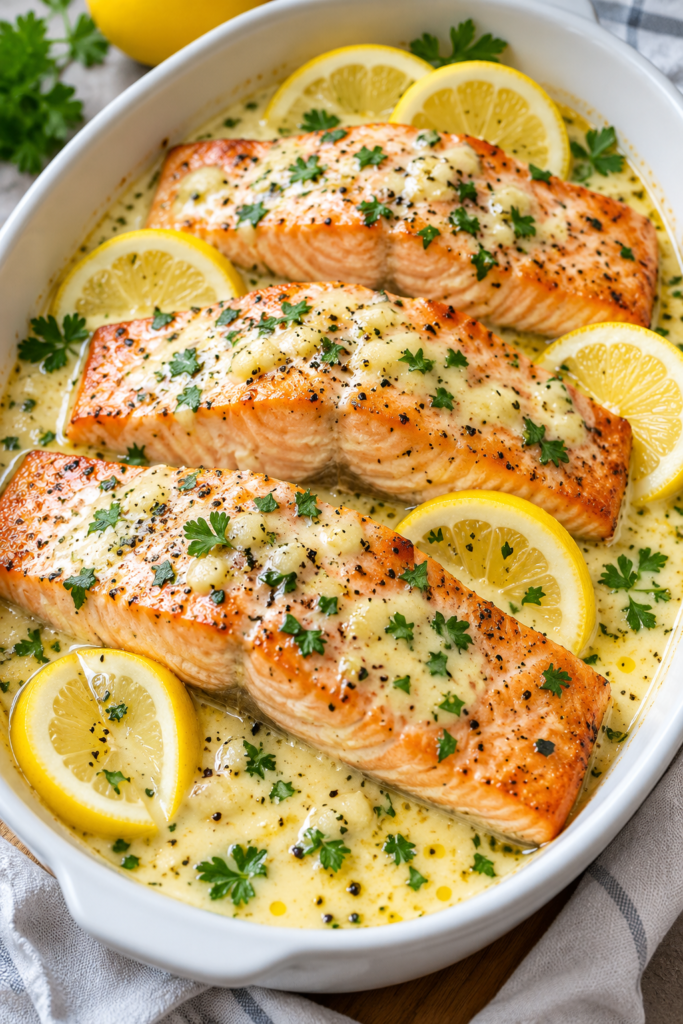
Salmon with Lemon Cream Sauce
Step-by-Step Instructions:
This salmon with lemon cream sauce comes together in one skillet, making it perfect for a delicious dinner without a sink full of dishes. Follow these steps for tender, flaky salmon and a smooth, creamy sauce with fresh lemon flavor.
Prepare the Salmon
Pat the salmon fillets dry with paper towels. Removing excess moisture helps the salmon develop a beautiful golden crust when seared.
In a small bowl, combine the garlic powder, paprika, salt, and black pepper. Rub the seasoning mixture evenly over both sides of the salmon fillets.
Sear the Salmon
Heat the olive oil in a large skillet over medium-high heat. Once the oil is hot, carefully place the salmon fillets in the pan.
Cook for about 4–5 minutes on the first side, depending on the thickness of the fillets. Avoid moving the salmon too early so it has time to develop a golden crust.
Carefully flip each fillet and cook for another 3–5 minutes, or until the salmon reaches an internal temperature of 145°F (63°C) at its thickest point.
Transfer the cooked salmon to a plate and set it aside while you prepare the sauce.
Sauté the Garlic
Reduce the heat to medium and add the butter to the same skillet. Let it melt, using a wooden spoon to loosen any flavorful browned bits left behind by the salmon.
Add the minced garlic and cook for about 30–60 seconds, stirring frequently. The garlic should become fragrant without turning brown, which can make the sauce taste bitter.
Add the Broth
Pour the chicken or vegetable broth into the skillet. Stir well, scraping the bottom of the pan to incorporate the browned bits into the liquid.
Allow the broth to simmer for 2–3 minutes, giving it time to reduce slightly and concentrate its flavor.
Make the Lemon Cream Sauce
Lower the heat to medium-low and slowly pour in the heavy cream. Stir until the cream and broth are combined into a smooth sauce.
Let the mixture simmer gently for 3–5 minutes, stirring occasionally, until it begins to thicken. Avoid boiling the sauce vigorously, as high heat can affect its texture.
Add the fresh lemon juice and, if desired, the lemon zest. Stir and taste the sauce before adjusting the seasoning with additional salt and black pepper.
For extra flavor, stir in the optional capers, grated Parmesan, or a pinch of red pepper flakes. If using baby spinach, add it now and cook until wilted.
Return the Salmon to the Skillet
Carefully place the salmon fillets back into the skillet, nestling them into the lemon cream sauce.
Spoon some sauce over each fillet and let everything warm together for 1–2 minutes. Keep the heat low to prevent the salmon from overcooking and the sauce from becoming too thick.
Sprinkle the chopped fresh parsley over the salmon just before serving. You can also use fresh dill for a slightly different flavor.
Serve and Enjoy
Remove the skillet from the heat and serve the salmon immediately while the sauce is warm and creamy.
Spoon extra lemon cream sauce over each fillet, making sure every serving gets plenty of garlic, lemon, and fresh herbs. Serve with rice, mashed potatoes, roasted vegetables, or pasta to soak up the flavorful sauce.
Tips for the Best Salmon with Lemon Cream Sauce
- Choose evenly sized fillets: Similar thickness helps the salmon cook at the same rate.
- Dry the salmon thoroughly: This helps create a better sear and prevents excess moisture from collecting in the pan.
- Keep the sauce at a gentle simmer: Avoid high heat once the cream has been added.
- Add lemon juice gradually: Start with the recommended amount and adjust to your taste for the right balance of richness and acidity.
- Avoid overcooking: Check the thickest part of the fillet with a food thermometer.
- Adjust the consistency: If the sauce becomes too thick, add a small splash of broth. If it is too thin, let it simmer gently for another minute or two.
Your salmon with lemon cream sauce is now ready to enjoy: tender, flavorful salmon coated in a rich, garlicky sauce with a bright lemon finish.
Salmon with Lemon Cream Sauce
Serving Ideas, Storage, Variations, and FAQs:
Salmon with lemon cream sauce is a delicious main dish that feels elegant enough for a special occasion but is simple enough for a busy weeknight. The tender salmon, rich garlic cream sauce, and bright lemon flavor pair beautifully with a variety of sides.
Whether you serve it with roasted vegetables, fluffy rice, or creamy mashed potatoes, this easy salmon dinner is sure to become a favorite.
What to Serve with Salmon with Lemon Cream Sauce
The best side dishes complement the creamy sauce without overpowering the delicate flavor of the salmon.
1. Garlic Mashed Potatoes
Creamy mashed potatoes are an excellent choice because they absorb the lemon cream sauce beautifully. Add a little butter, roasted garlic, and fresh parsley for extra flavor.
2. Steamed Rice
Fluffy white rice, jasmine rice, or basmati rice makes a simple side dish that allows the salmon and sauce to shine. Spoon the extra sauce over the rice for an even more satisfying meal.
3. Roasted Asparagus
Roasted asparagus adds a fresh, slightly earthy flavor that balances the richness of the cream sauce. Toss the asparagus with olive oil, salt, pepper, and a squeeze of lemon before roasting.
4. Buttered Pasta
Serve the salmon over linguine, fettuccine, or spaghetti for a comforting dinner. Toss the pasta with a little of the lemon cream sauce before placing the salmon on top.
5. Roasted Vegetables
Broccoli, carrots, zucchini, and green beans are all excellent options. Roast them until tender with lightly caramelized edges for a delicious contrast to the creamy salmon.
6. Fresh Green Salad
A simple green salad with mixed greens, cucumber, cherry tomatoes, and a light vinaigrette provides a refreshing contrast to the rich sauce.
How to Store Leftover Salmon
If you have leftover salmon with lemon cream sauce, allow it to cool slightly before storing it in an airtight container.
- Refrigerator: Store leftovers for up to 3 days.
- Freezer: Freeze in an airtight, freezer-safe container for up to 2 months for the best quality. Keep in mind that cream sauces may separate slightly after thawing.
- Reheating: Warm gently in a covered skillet over low heat, adding a splash of broth or cream if the sauce has thickened. Heat leftovers to 165°F (74°C).
Avoid reheating the salmon over high heat, as this can make the fish dry and cause the sauce to separate.
Delicious Variations to Try
One of the best things about this recipe is how easy it is to customize.
Creamy Parmesan Salmon
Stir 2 tablespoons of freshly grated Parmesan into the sauce after adding the cream. Let it melt gently for a richer, savory flavor.
Spinach Lemon Cream Salmon
Add about 1 cup of baby spinach to the sauce and stir until wilted. The spinach adds color and makes the dish even more satisfying.
Lemon Dill Salmon
Replace the parsley with fresh dill for a bright, herbaceous flavor that pairs naturally with salmon and lemon.
Spicy Lemon Cream Salmon
Add a pinch of red pepper flakes to the garlic while sautéing. This gives the sauce a gentle kick without overwhelming the lemon flavor.
Lemon Caper Salmon
Stir 1 tablespoon of drained capers into the sauce for a briny, tangy flavor that complements the richness of the cream.
Dairy-Free Version
Use a suitable unsweetened dairy-free cooking cream and olive oil or a dairy-free butter alternative. The flavor and thickness may vary depending on the products you choose.
Frequently Asked Questions
Can I use frozen salmon?
Yes. Thaw frozen salmon completely in the refrigerator before cooking, then pat it dry with paper towels. This helps the salmon sear properly and cook more evenly.
Can I make salmon with lemon cream sauce without heavy cream?
Yes. You can try half-and-half for a lighter sauce, although it will be thinner and more prone to separating. Keep the heat low and avoid boiling it. For a thicker result, you may need to simmer it gently for a little longer.
How do I know when salmon is fully cooked?
The safest method is to use an instant-read food thermometer. The thickest part should reach 145°F (63°C). Properly cooked salmon should also flake easily with a fork.
Why did my lemon cream sauce separate?
The sauce may separate if it becomes too hot or boils vigorously. Keep the heat at a gentle simmer and stir regularly. Adding the lemon juice gradually can also help maintain a smooth texture.
Can I prepare the sauce ahead of time?
For the freshest flavor and texture, prepare the sauce just before serving. You can save time by mincing the garlic, chopping the herbs, measuring the broth and cream, and preparing the seasonings in advance.
Can I use another type of fish?
Yes. Cod, haddock, and other firm white fish can work well with lemon cream sauce. Adjust the cooking time according to the thickness of the fish and check for doneness before serving.
What can I do if the sauce is too thin?
Let the sauce simmer gently for another minute or two, stirring occasionally. Avoid turning up the heat too much, as the cream can separate. A small amount of grated Parmesan can also help thicken the sauce.
Is salmon with lemon cream sauce good for a weeknight dinner?
Absolutely. The recipe uses simple ingredients, requires just one skillet, and can be ready in approximately 25–35 minutes, depending on the thickness of the salmon and your preparation time.
Final Thoughts
Salmon with lemon cream sauce is a simple yet elegant meal that combines tender, flaky salmon with a rich garlic cream sauce and refreshing lemon flavor. It is easy to customize with fresh herbs, spinach, Parmesan, or capers, making it suitable for a variety of tastes.
Serve it with rice, pasta, mashed potatoes, or roasted vegetables for a complete and satisfying dinner. With its straightforward preparation and delicious flavor, this recipe is a wonderful addition to your regular dinner rotation.
If you try this salmon with lemon cream sauce, pair it with your favorite side dish and enjoy every bite of this comforting homemade meal.