
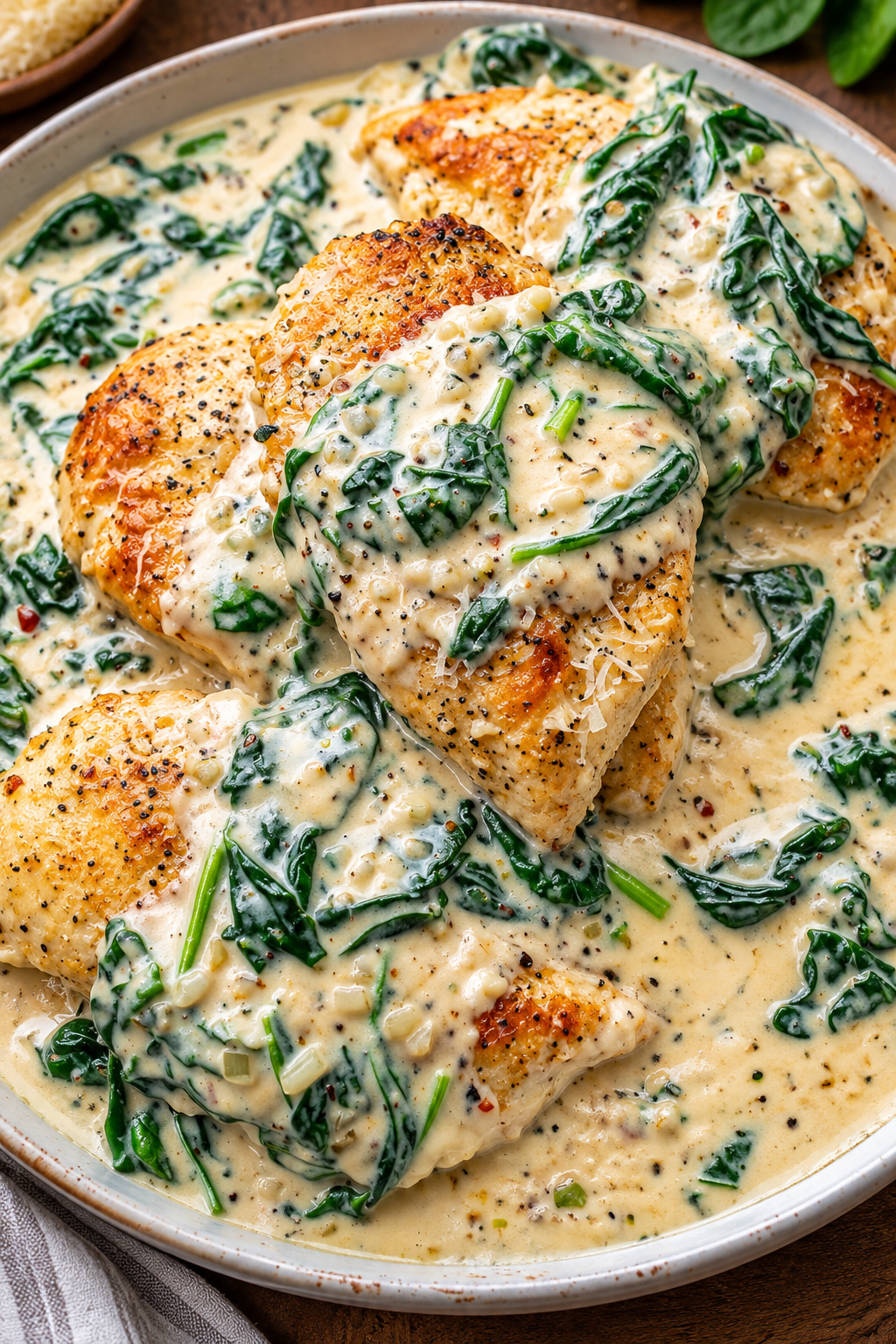
Chicken Florentine : Introduction, Ingredients Overview, and Why You’ll Love It
Chicken Florentine
If you’re looking for a comforting dinner that feels elegant enough for a special occasion but is easy enough for a busy weeknight, Chicken Florentine is a recipe you’ll want to make again and again. This classic-inspired dish features tender chicken breasts cooked until golden, served in a creamy garlic Parmesan sauce with fresh spinach.
The combination of juicy chicken, wilted spinach, and rich cream sauce creates a satisfying meal that pairs beautifully with pasta, rice, mashed potatoes, or crusty bread. Every bite delivers a balance of savory flavors, creamy texture, and fresh ingredients.
One of the best things about Chicken Florentine is how quickly it comes together. With simple ingredients and one skillet, you can prepare a restaurant-style dinner at home without complicated cooking techniques.
Whether you’re planning a family dinner, preparing a cozy weekend meal, or looking for a new chicken recipe to add to your weekly menu, this creamy Chicken Florentine is a delicious choice.
What Is Chicken Florentine?
Chicken Florentine is a dish inspired by the Florentine style of cooking, which commonly features spinach as a central ingredient. In many modern recipes, chicken is served with spinach in a creamy sauce, often flavored with garlic, Parmesan cheese, and herbs.
The chicken is typically seasoned and pan-seared to create a golden exterior while keeping the inside tender and juicy. Fresh spinach is then cooked until wilted, and cream, broth, and cheese are combined to make a smooth, flavorful sauce.
Although variations exist, the combination of chicken, spinach, and a creamy sauce is what makes this dish so recognizable.
It’s a wonderful way to turn everyday chicken breasts into a comforting meal that feels special without requiring expensive ingredients.
Why You’ll Love This Chicken Florentine Recipe
There are plenty of reasons to add this recipe to your dinner rotation.
- Rich and creamy sauce: Heavy cream and Parmesan create a smooth, savory sauce that coats the chicken beautifully.
- Tender, juicy chicken: Pan-searing develops a golden crust while helping preserve the meat’s moisture.
- Fresh spinach: Spinach adds color, flavor, and a fresh contrast to the creamy sauce.
- Simple ingredients: Most of the ingredients are easy to find at an ordinary grocery store.
- One-skillet convenience: Cooking the main components in one pan helps build flavor and reduces cleanup.
- Weeknight-friendly: The recipe can be prepared in approximately 30–40 minutes.
- Easy to serve: It pairs well with pasta, rice, potatoes, or vegetables.
- Restaurant-style flavor at home: Garlic, Parmesan, and cream create a delicious sauce without complicated preparation.
This recipe is especially appealing when you want a hearty dinner that combines protein, vegetables, and a flavorful sauce in one dish.
Recipe at a Glance
- Preparation time: 10–15 minutes
- Cooking time: 20–25 minutes
- Total time: Approximately 30–40 minutes
- Servings: 4
- Category: Main course, chicken dinner
- Cooking method: Stovetop
- Main ingredients: Chicken breasts, spinach, garlic, cream, and Parmesan cheese
- Flavor profile: Creamy, savory, garlicky, and cheesy
Cooking times may vary depending on the thickness of the chicken breasts and the heat of your stove.
Ingredients Overview
Each ingredient contributes to the flavor and texture of this creamy Chicken Florentine.
1. Chicken Breasts
Boneless, skinless chicken breasts are a popular choice because they cook relatively quickly and absorb the flavors of the sauce.
For even cooking, choose similarly sized pieces. If the breasts are thick, slice them horizontally into thinner cutlets or gently pound them to an even thickness.
Seasoning the chicken before searing helps develop a flavorful golden crust.
2. Fresh Spinach
Spinach is an essential ingredient in Chicken Florentine. It adds a mild, earthy flavor and creates a beautiful contrast with the creamy sauce.
Fresh baby spinach is especially convenient because the leaves are tender and wilt quickly. If using mature spinach, remove any particularly tough stems.
Add the spinach near the end of cooking so it wilts without becoming overly soft.
3. Heavy Cream
Heavy cream gives the sauce its rich, velvety texture. It combines with the chicken juices and seasonings to create a smooth coating for the chicken.
For a lighter sauce, you can use half-and-half, although the result will be less rich and may require more careful simmering.
4. Garlic
Fresh garlic provides a fragrant, savory flavor that complements both the chicken and spinach.
Cook the garlic briefly in the skillet after removing the chicken. This allows it to release its aroma without burning.
5. Parmesan Cheese
Parmesan adds a salty, nutty flavor and helps make the sauce more flavorful.
Freshly grated Parmesan generally melts more smoothly than many pre-shredded varieties. Add it gradually and stir until incorporated.
6. Chicken Broth
Chicken broth helps balance the richness of the cream and adds savory depth to the sauce.
It also helps loosen the browned bits left in the skillet after searing the chicken, allowing those flavors to become part of the finished dish.
7. Olive Oil and Butter
Olive oil helps brown the chicken, while butter adds richness to the sauce. Using both creates a flavorful foundation for the garlic and other ingredients.
8. Seasonings
Salt, black pepper, and Italian seasoning bring the ingredients together. A pinch of red pepper flakes is optional if you prefer a little heat.
Season gradually, especially after adding Parmesan, since the cheese and broth may already contain salt.
What to Serve with Chicken Florentine
Chicken Florentine is delicious on its own, but serving it with a suitable side dish makes the meal even more satisfying.
- Pasta: Fettuccine, linguine, or penne works well with the creamy sauce.
- Rice: Steamed white or brown rice absorbs the flavorful sauce.
- Mashed potatoes: Their soft texture pairs beautifully with the chicken and spinach.
- Crusty bread: Use bread to soak up every bit of the garlic Parmesan sauce.
- Roasted vegetables: Roasted broccoli, carrots, or asparagus add color and texture.
- Simple green salad: A fresh salad provides a crisp contrast to the richness of the dish.
Choose a side based on the occasion and your preferences. Pasta or mashed potatoes make the meal especially comforting, while vegetables and salad create a lighter dinner.
Chicken Florentine : Ingredients and Preparation Notes
This creamy Chicken Florentine recipe combines golden pan-seared chicken, tender spinach, garlic, and Parmesan in a rich, flavorful sauce. With a few everyday ingredients, you can create a comforting restaurant-style dinner right in your own kitchen.
Ingredients for Chicken Florentine
Servings: 4 | Preparation: 10–15 minutes | Cooking: 20–25 minutes
For the Chicken
- 4 boneless, skinless chicken breasts (about 1½–2 pounds or 680–900 g)
- 1 teaspoon salt, or to taste
- ½ teaspoon black pepper
- 1 teaspoon Italian seasoning
- 2 tablespoons olive oil
- 1 tablespoon unsalted butter
For the Creamy Florentine Sauce
- 4 cloves garlic, minced
- ½ cup (120 ml) chicken broth
- 1 cup (240 ml) heavy cream
- ½ cup (50 g) freshly grated Parmesan cheese
- 5 ounces (140 g) fresh baby spinach
- ½ teaspoon Italian seasoning
- ¼ teaspoon black pepper, or to taste
- A pinch of red pepper flakes, optional
- 1 teaspoon fresh lemon juice, optional
The lemon juice adds a subtle brightness that balances the richness of the cream and cheese.
Ingredient Substitutions
You can adjust this recipe to suit your preferences while keeping the same creamy, savory flavor.
- Chicken breasts: Boneless, skinless chicken thighs can be used. They may require additional cooking time depending on their size.
- Fresh spinach: Frozen spinach can work. Thaw it completely and squeeze out excess water before adding it to the sauce.
- Heavy cream: Half-and-half can be used for a lighter sauce, although it will be less rich and may not thicken as much.
- Parmesan cheese: Pecorino Romano can be substituted, but it is saltier, so adjust the added salt accordingly.
- Chicken broth: Low-sodium chicken broth gives you more control over the seasoning.
- Italian seasoning: Use a combination of dried oregano, basil, and thyme if you don’t have a prepared blend.
- Olive oil: A neutral cooking oil can be used instead.
Equipment You’ll Need
Gather these basic kitchen tools before you begin:
- Large skillet, preferably stainless steel or cast iron
- Cutting board
- Sharp knife
- Measuring cups and spoons
- Tongs or a spatula
- Wooden spoon
- Meat thermometer
- Small bowl for preparing seasonings
A large skillet is especially helpful because it allows the chicken to brown evenly without overcrowding the pan.
Important Preparation Notes
1. Prepare the Chicken Evenly
If your chicken breasts are thick, slice them horizontally into thinner cutlets or gently pound them to an even thickness.
This helps them cook more evenly and prevents the thinner portions from drying out while the thicker parts finish cooking.
Pat the chicken dry with paper towels before seasoning. Removing excess surface moisture helps create a golden-brown crust.
2. Season Before Searing
Season both sides of the chicken with salt, black pepper, and Italian seasoning.
Allowing the seasoning to coat the chicken evenly ensures that every bite has flavor. You can prepare the garlic and measure the remaining sauce ingredients while the skillet heats.
3. Avoid Overcrowding the Pan
Heat the olive oil over medium-high heat before adding the chicken. If necessary, cook the pieces in batches.
Crowding the skillet can cause the chicken to release moisture and steam instead of developing a golden crust.
Sear until nicely browned on both sides, then finish cooking as needed. The thickest part of each piece must reach 165°F (74°C) for food safety.
4. Use Freshly Grated Parmesan
Freshly grated Parmesan usually melts more smoothly into the cream sauce than pre-shredded cheese.
Add it gradually after the cream has warmed, stirring gently to help it incorporate. Avoid boiling the sauce vigorously, as excessive heat can affect its texture.
5. Add Spinach Near the End
Fresh spinach wilts quickly, so there’s no need to cook it for a long time.
Stir it into the sauce near the end of cooking and allow the leaves to soften. This helps preserve their color and prevents them from becoming overly mushy.
6. Adjust the Sauce Consistency
If the sauce is too thick, add a small splash of chicken broth. If it is too thin, let it simmer gently for a few additional minutes before returning the chicken to the skillet.
Remember that Parmesan thickens the sauce as it melts, so give it a moment before making further adjustments.
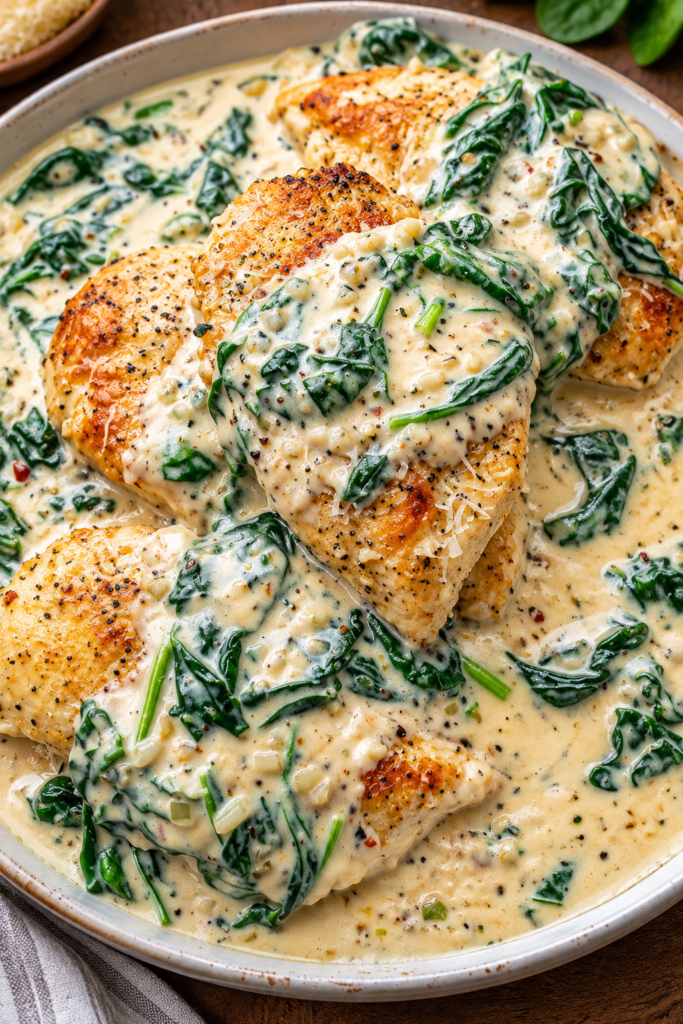
Chicken Florentine : Step-by-Step Instructions
Now that your ingredients are prepared, it’s time to make this delicious Chicken Florentine. The secret to a flavorful dish is searing the chicken until golden, building the sauce in the same skillet, and adding the spinach at just the right moment.
Follow these simple steps to create tender chicken coated in a creamy garlic Parmesan sauce.
Prepare and Season the Chicken
Pat the chicken breasts dry with paper towels to remove excess moisture. If the pieces are particularly thick, slice them horizontally into thinner cutlets or gently pound them to an even thickness.
Season both sides with the salt, black pepper, and 1 teaspoon of Italian seasoning.
Preparing the chicken evenly helps it cook consistently and ensures every piece develops a flavorful crust.
Sear the Chicken
Heat 2 tablespoons of olive oil in a large skillet over medium-high heat.
Once the oil is hot, carefully add the chicken breasts in a single layer. If your skillet is too small, cook the chicken in batches rather than overcrowding the pan.
Sear for approximately 4–6 minutes per side, depending on the thickness, until the chicken develops a golden-brown exterior.
The chicken does not need to be fully cooked at this stage if it will finish cooking in the sauce. Transfer the browned pieces to a clean plate and set them aside.
Important: The chicken must reach an internal temperature of 165°F (74°C) before serving.
Sauté the Garlic
Reduce the heat to medium and add 1 tablespoon of unsalted butter to the same skillet.
Once the butter melts, add the 4 cloves of minced garlic. Stir for approximately 30–60 seconds, until fragrant.
Scrape up the browned bits left from cooking the chicken. These flavorful pieces help give the sauce a deeper, more savory taste.
Avoid browning the garlic too much, as burnt garlic can make the sauce bitter.
Add the Chicken Broth
Pour ½ cup (120 ml) of chicken broth into the skillet.
Stir gently, scraping the bottom of the pan to release any remaining browned bits. Let the broth simmer for approximately 1–2 minutes so it can reduce slightly.
This step builds the foundation of the sauce and helps balance the richness of the cream that comes next.
Make the Creamy Parmesan Sauce
Reduce the heat to medium-low and pour in 1 cup (240 ml) of heavy cream.
Add the remaining ½ teaspoon of Italian seasoning and ¼ teaspoon of black pepper. Stir gently until the ingredients are combined.
Allow the sauce to simmer gently for 2–3 minutes. Avoid bringing it to a vigorous boil, as this can affect the texture.
Gradually stir in ½ cup (50 g) of freshly grated Parmesan cheese. Continue stirring until the cheese melts and the sauce becomes smooth and creamy.
If you enjoy a little heat, add a pinch of red pepper flakes.
If the sauce seems too thick, add a small splash of chicken broth. If it is too thin, allow it to simmer gently for another minute or two.
Add the Fresh Spinach
Add 5 ounces (140 g) of fresh baby spinach to the skillet.
Stir gently, allowing the leaves to wilt into the warm sauce. This usually takes approximately 1–2 minutes.
The spinach will reduce significantly in volume as it cooks, blending into the sauce while adding color and a mild, earthy flavor.
If you’re using frozen spinach instead, make sure it has been thawed and squeezed dry before adding it to the skillet.
Return the Chicken to the Skillet
Carefully return the seared chicken breasts and any accumulated juices to the skillet.
Spoon the creamy spinach sauce over the chicken so each piece is well coated.
Reduce the heat to low and simmer gently for approximately 3–6 minutes, or until the chicken is fully cooked and reaches an internal temperature of 165°F (74°C) at its thickest point.
The exact time will depend on the thickness of the chicken and how much it cooked during searing.
Avoid prolonged simmering, which can cause the chicken to become dry.
Finish and Adjust the Flavor
Taste the sauce and adjust the seasoning as needed.
Add a little more black pepper, a pinch of salt if necessary, or 1 teaspoon of fresh lemon juice for a brighter flavor.
The lemon juice is optional, but it can balance the richness of the cream and Parmesan without making the sauce taste strongly of lemon.
For a finishing touch, sprinkle a little extra grated Parmesan or freshly chopped parsley over the dish.
Serve Your Chicken Florentine
Remove the skillet from the heat and allow the chicken to rest briefly in the sauce.
Serve the chicken breasts with generous spoonfuls of creamy spinach sauce over the top.
This dish pairs beautifully with:
- Fettuccine or penne pasta
- Steamed white rice
- Creamy mashed potatoes
- Roasted vegetables
- Crusty bread for soaking up the sauce
For an elegant presentation, place each chicken breast on a plate, spoon the spinach cream sauce over it, and finish with a light sprinkle of Parmesan.
Tips for Perfect Chicken Florentine
- Dry the chicken before searing: This helps the surface brown properly.
- Use evenly sized pieces: Similar thicknesses help the chicken cook consistently.
- Don’t burn the garlic: A short cooking time is enough to release its aroma.
- Keep the sauce at a gentle simmer: Excessive heat can cause the cream sauce to separate.
- Add Parmesan gradually: This helps the cheese melt smoothly.
- Avoid overcooking the spinach: Add it near the end so it remains tender.
- Check the internal temperature: Chicken should reach 165°F (74°C) before serving.
Troubleshooting Common Problems
Why Is My Cream Sauce Too Thin?
The sauce may need more time to simmer gently. Allow it to reduce for a few minutes before adding the chicken back to the skillet. Avoid adding too much broth at once.
Why Did My Sauce Separate?
High heat can cause a cream sauce to become grainy or separate, particularly after adding cheese. Keep the heat low when incorporating the cream and Parmesan, and avoid vigorous boiling.
Why Is My Chicken Dry?
Chicken breasts can dry out if they are overcooked or cut unevenly. Use a meat thermometer and remove the chicken from the heat once it reaches 165°F (74°C).
Can I Make the Sauce Ahead of Time?
For the best texture, prepare the sauce and chicken together shortly before serving. Cream sauces can change consistency during refrigeration and reheating, so leftovers should be warmed gently.
Your Chicken Florentine is now ready: golden chicken, tender spinach, and a rich garlic Parmesan sauce come together in one satisfying skillet meal.
Chicken Florentine : Serving, Storage, and Frequently Asked Questions
This creamy Chicken Florentine is a comforting dinner that combines tender chicken, fresh spinach, and a rich garlic Parmesan sauce. Whether you’re serving it for a family dinner or preparing a special meal for guests, its simple ingredients and restaurant-style flavor make it a recipe worth keeping.
In this final part, you’ll learn how to serve the dish, store leftovers safely, reheat the sauce without losing its creamy texture, and solve common cooking problems.
How to Serve Chicken Florentine
Chicken Florentine is delicious on its own, but pairing it with the right side dish makes the meal even more satisfying.
1. Serve with Pasta
Fettuccine, linguine, or penne are excellent choices. The creamy Parmesan sauce coats the pasta beautifully, creating a complete and comforting dinner.
For the best results, cook the pasta separately and toss it with a little sauce just before serving.
2. Pair with Steamed Rice
White or brown rice provides a simple base that absorbs the flavorful cream sauce. This option is especially convenient for a quick weeknight dinner.
3. Add Creamy Mashed Potatoes
Mashed potatoes complement the tender chicken and rich sauce. Their smooth texture makes every bite comforting and satisfying.
4. Serve with Crusty Bread
Warm crusty bread is perfect for soaking up the garlic Parmesan sauce. Serve a few slices alongside the chicken for an easy, rustic meal.
5. Include Roasted Vegetables
Roasted broccoli, asparagus, carrots, or green beans add color and texture while balancing the richness of the sauce.
6. Finish with a Fresh Salad
A simple green salad with a light vinaigrette provides a refreshing contrast to the creamy chicken. Keep the dressing light so it doesn’t overpower the main dish.
How to Store Chicken Florentine
Proper storage helps preserve the flavor and texture of your leftovers.
Refrigerating Leftovers
Allow the chicken to cool slightly, then transfer it with the sauce to a shallow, airtight container.
Refrigerate within 2 hours of cooking, or within 1 hour if the temperature is above 90°F (32°C). Keep the refrigerator at 40°F (4°C) or below.
For the best quality and food safety, consume the leftovers within 3–4 days.
Freezing Chicken Florentine
You can freeze Chicken Florentine, although cream sauces may separate slightly after thawing.
To freeze:
- Allow the dish to cool.
- Divide it into individual portions.
- Transfer the portions to freezer-safe airtight containers.
- Label with the date and freeze.
For the best quality, use within approximately 2 months. Thaw overnight in the refrigerator before reheating.
The sauce may require gentle stirring during reheating to restore a smoother consistency.
How to Reheat Chicken Florentine
The key to reheating this dish is using gentle heat so the chicken stays moist and the cream sauce remains smooth.
Stovetop Method
- Place the chicken and sauce in a skillet.
- Add a small splash of chicken broth or cream if the sauce has thickened.
- Cover and warm over low to medium-low heat, stirring the sauce gently.
- Heat until the chicken reaches an internal temperature of 165°F (74°C).
Avoid boiling the sauce vigorously.
Microwave Method
- Place a serving in a microwave-safe dish.
- Add a small spoonful of broth or cream if needed.
- Cover loosely with a microwave-safe lid.
- Heat in short intervals, stirring the sauce and turning the chicken as appropriate.
- Continue until heated throughout to 165°F (74°C).
Microwave power varies, so check the temperature before serving.
Make-Ahead Tips
If you want to prepare Chicken Florentine for a busy evening, a little advance preparation can make cooking easier.
- Prepare the ingredients: Mince the garlic, measure the broth and cream, grate the Parmesan, and wash the spinach in advance.
- Prepare the chicken: Trim and portion the chicken breasts, then refrigerate them until cooking.
- Cook shortly before serving: For the best texture, sear the chicken and finish the sauce shortly before mealtime.
- Reheat leftovers gently: If you cook the dish completely in advance, refrigerate it promptly and reheat it thoroughly before serving.
Preparing the ingredients ahead of time saves effort while helping the chicken remain tender and the sauce creamy.
Frequently Asked Questions
1. What Does Chicken Florentine Mean?
Chicken Florentine refers to a chicken dish prepared in the Florentine style, commonly featuring spinach. Modern versions often include a creamy sauce made with garlic, cream, and Parmesan cheese.
2. Can I Use Chicken Thighs Instead of Chicken Breasts?
Yes. Boneless, skinless chicken thighs work well and often have a richer flavor. Cooking time will vary depending on their size and thickness. Ensure the chicken reaches 165°F (74°C) internally.
3. Can I Use Frozen Spinach?
Yes. Thaw the spinach completely and squeeze out as much excess water as possible before adding it to the sauce. This prevents unnecessary moisture from thinning the cream sauce.
4. Can I Make Chicken Florentine Without Heavy Cream?
You can substitute half-and-half for a lighter sauce, although it will be less rich. Keep the heat gentle and avoid vigorous boiling to help prevent the sauce from separating.
5. How Do I Thicken the Sauce?
Allow the sauce to simmer gently for a few additional minutes before returning the chicken to the skillet. Parmesan also helps add body. If the sauce is already thick, avoid reducing it too much because it will continue to thicken slightly as it cools.
6. Why Is My Chicken Florentine Sauce Grainy?
Graininess can result from overheating the sauce or using cheese that does not melt smoothly. Lower the heat before adding Parmesan and stir it in gradually. Freshly grated cheese is generally the best choice.
7. Can I Make Chicken Florentine Without Parmesan?
Yes. You can omit the Parmesan, but the sauce will have a milder flavor and may be slightly thinner. Taste and adjust the seasoning before serving.
8. Is Chicken Florentine Suitable for Meal Prep?
Yes. Divide the cooked chicken and sauce into individual airtight containers and refrigerate for up to 3–4 days. Store pasta or rice separately if you want to maintain its texture.
9. How Do I Keep Chicken Breasts Tender?
Choose pieces of similar thickness, avoid overcrowding the skillet, and use a meat thermometer to prevent overcooking. Let the chicken rest briefly before serving so the juices can redistribute.
10. Can I Make Chicken Florentine in One Pan?
Yes. The chicken, garlic, broth, cream, Parmesan, and spinach can all be prepared in the same skillet. Cooking everything in one pan allows the sauce to absorb the browned bits left from searing the chicken, adding extra flavor while reducing cleanup.
Expert Tips for the Best Chicken Florentine
Keep these final recommendations in mind whenever you prepare this dish:
- Pat the chicken dry before seasoning.
- Sear the chicken until golden brown.
- Cook garlic briefly to avoid bitterness.
- Use freshly grated Parmesan for a smoother sauce.
- Keep the cream sauce at a gentle simmer.
- Add spinach near the end of cooking.
- Check that the chicken reaches 165°F (74°C).
- Taste the sauce before adding extra salt.
- Serve promptly for the best texture and flavor.
Final Thoughts
This Chicken Florentine recipe is an excellent way to turn everyday chicken breasts into a creamy, flavorful dinner. Tender chicken, fresh spinach, garlic, and Parmesan come together in a rich sauce that feels special without requiring complicated techniques.
Serve it with pasta for a comforting meal, rice for a simple dinner, or roasted vegetables for a balanced plate. With its straightforward preparation and versatile serving options, Chicken Florentine is a wonderful addition to your regular dinner rotation.
Prepare it fresh, garnish with a little Parmesan, and enjoy every bite of this creamy, homemade classic.